Nine moles, one abuela, and a very long Sunday
A cooking lesson in Oaxaca that started with a trip to the market at six and ended, thirteen hours later, with everyone asleep on the patio.
Marisol Ferreira
Oaxaca, Mexico
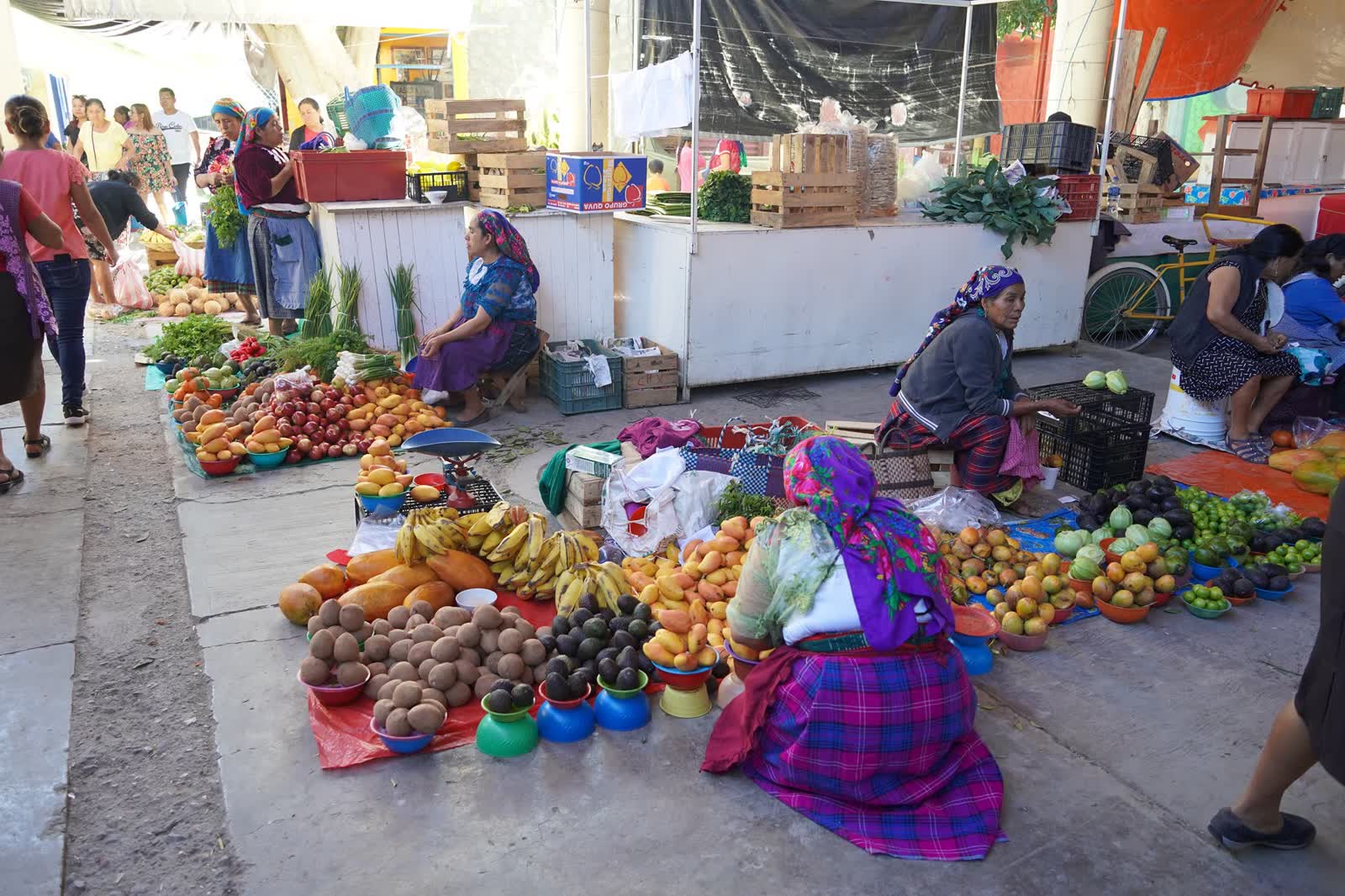
Doña Elvira does not teach classes. Her granddaughter told me this twice on the phone, and then said that I could come on Sunday anyway if I brought good coffee and did not ask her about the recipe, because there is no recipe, there is only the way it is done. So I brought coffee from a roaster near the Zócalo and I did not ask about the recipe, and at six in the morning we went to the Mercado de Abastos, which is less a market than a small weather system.
Mole, plural moles, is not one dish. Oaxaca has seven canonical ones, and Doña Elvira has nine, because she counts two that her mother made and refuses to explain the difference. The famous one is negro, which is black and sweet and bitter and has chocolate in it, and thirty other things, including chillies that are burned deliberately until the kitchen fills with smoke and everyone stands in the courtyard coughing and laughing at the foreigner who thought this was a mistake.
The work is mostly grinding. There is a metate, a stone slab worn to a shallow curve by four generations of forearms, and you kneel in front of it and push a stone roller across the toasted chillies and seeds and tortillas and spices until they become a paste, and then you push it across again, and then Doña Elvira comes over and tastes it off her thumb and says, not unkindly, that it is not ready. I did this for two hours. My shoulders will not forgive me. The paste, when she finally accepted it, was the colour of a good night's sleep.
The paste, when she finally accepted it, was the colour of a good night's sleep.
There were eleven of us at the table in the end, most of whom I had not been introduced to and several of whom were children with the specific authority that children have around food they grew up with. The mole negro came out over turkey, with rice and tortillas from the comal, and there was mezcal in small clay cups, and a rojo and an amarillo and a coloradito for comparison, and the comparison took a very long time.
The recipe is not in a book, it is in the shoulders.
I asked, at some point in the evening, whether she was worried that nobody would make it this way after her. She looked at the granddaughter, who was already washing the metate, and at the two children who had been allowed to lick the spoon, and she said something that I later had translated as: the recipe is not in a book, it is in the shoulders. Then she went to bed. The rest of us stayed on the patio under a string of bulbs, and I fell asleep in a chair, and I woke up at midnight with a plate still on my knee.