Eighteen islands, no trees, and weather that changes its mind
Sheep on the roofs, tunnels under the sea, and a fog that rolls in like a stagehand pulling a curtain across the Atlantic.
Ines Halvorsen
Tórshavn, Faroe Islands
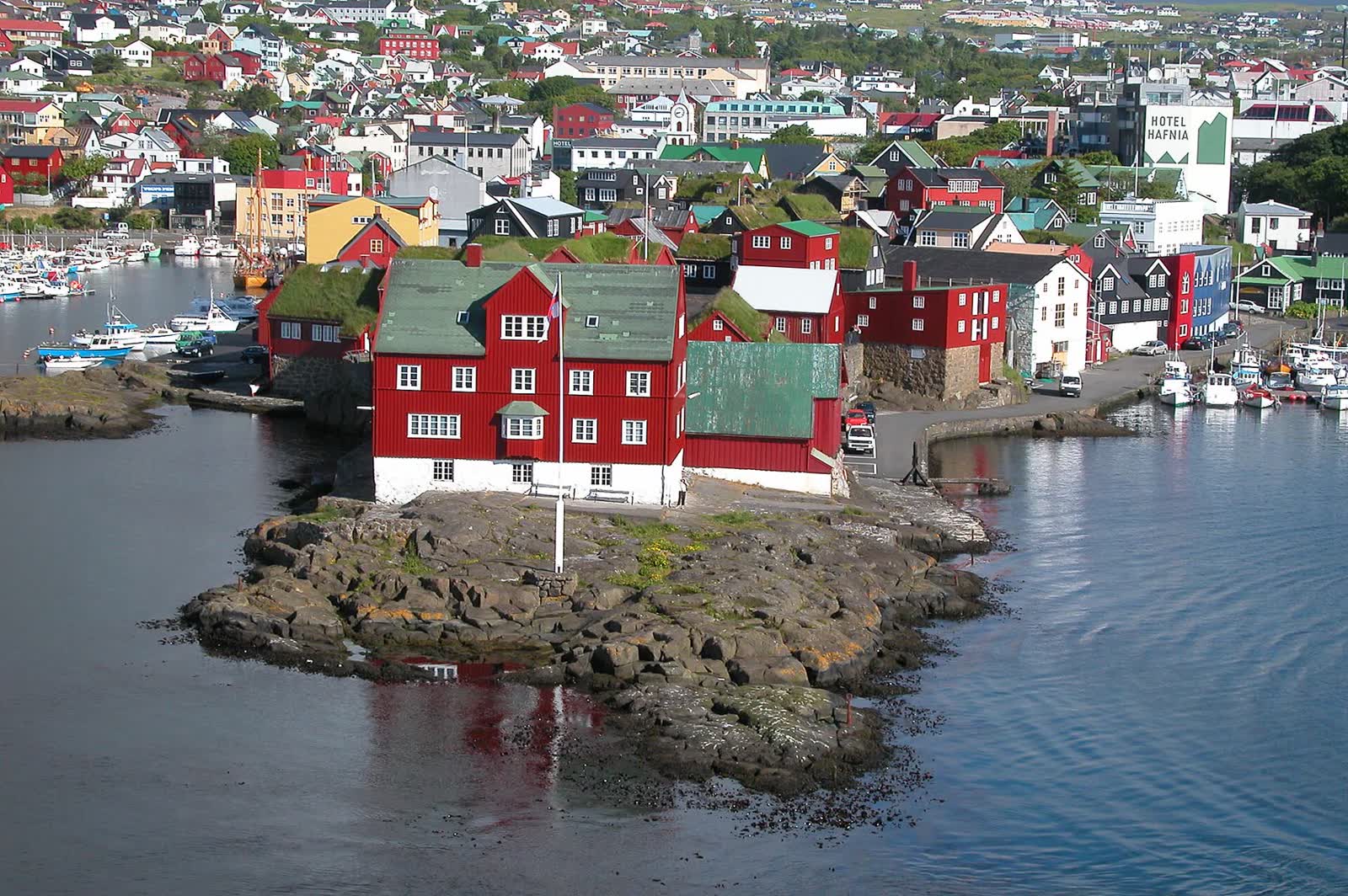
The pilot announced that we might not be able to land, in the tone of someone reading a train timetable. Vágar airport sits on a shelf between a mountain and a fjord, and the fog had come in, and the plane circled twice through absolute grey before a hole opened and we dropped through it onto a runway that appeared to have been drawn on with a ruler that morning. Welcome to the Faroes, said the pilot, where you will spend a lot of time waiting for the weather to make up its mind.
There are eighteen islands, seventeen inhabited, joined by ferries, bridges, and a series of undersea tunnels that are lit like nightclubs and have roundabouts in them. There are no trees to speak of, because the wind will not allow it. What there is instead is grass, on everything, including the roofs, which are turfed for warmth and grazed by sheep who stand on the ridgelines of houses with the calm of tenants who have read the lease.
I spent a morning in Gásadalur, a village of eighteen people that until 2004 could only be reached by hiking over a mountain or by helicopter, where a waterfall drops off the edge of the island straight into the sea, no beach, no negotiation. The fog came in while I was standing there and took the waterfall away entirely. Then it took the sea. Then it took my feet. I stood in the white for twenty minutes and heard the water falling and could not see it, and it was, I think, the most Faroese thing that could have happened.
Sheep who stand on the ridgelines of houses with the calm of tenants who have read the lease.
The light, when you get it, is a surprise every time. It comes in slots. A single beam finds a village of red houses on a black beach, holds it for ninety seconds, moves on to a cliff, moves on to the sea, which turns from slate to something like green glass. Photographers here do not chase the light so much as ambush it, with a thermos, from a parked car.
Photographers here do not chase the light so much as ambush it.
On the last evening the fog lifted altogether and Tórshavn, the smallest capital in Europe, sat under a clear sky the colour of a bruise healing. I ate fermented lamb and skerpikjøt in a restaurant with a turf roof, and drank a beer brewed on an island of fourteen people, and walked back along the harbour where the boats are painted the same colours as the houses because paint, like everything here, comes on the same ferry. I thought about the sheep on the roofs and the waterfall in the white. I have never wanted so badly to go back to somewhere that had barely let me see it.